Why Independence Is Essential to the Intellectual Life
February 2026
1. What is an Independent Scholar?
There was a time when I would have fled the term Independent Scholar. It was to me a mark of failure, conjuring old tennis shoes, worn out sports jackets, and academic has-beens with nothing to show for their years in graduate school. For a long time, I was determined that I would never be an Independent Scholar. But I no longer view the status of Independent Scholar as a mark of shame or failure, reserved for those who couldn’t make it in the Academy. I now view it as a mark of courage and dedication to intellectual life, claimed by those who have chosen to blaze their own trails outside contemporary institutions of higher education.
Several years ago, I had the dawning realization that I urgently needed to start making alternative career plans. After a decade spent completing two master’s degrees, a PhD, and a postdoc, it had become clear to me that my journey through Academia was almost certainly at an end. Like many others, I had published articles in prestigious journals, won a teaching award, successfully taught hundreds of undergraduate students at multiple universities, and received the acclamation of my supervisor and dissertation committee. I realized, at some point, that none of this mattered. It wasn’t just that the jobs were too few and far between. Even if I miraculously landed a job, reports from former colleagues and others suggested that being a professor might not entail what I had hoped it might. And there are bigger changes on the horizon in the university system, which I’ll talk about shortly. Those changes made staying in Academia seem like a dead end.
I also have two children who are based in Chicago. For me, staying in Academia would probably have meant moving away from them, and I just didn’t feel that was something I could do. I managed to find a job in the renewable energy industry, where I worked for several years, even as I maintained a sense of vocation as a scholar. This was an invaluable experience. But over time I experienced a growing feeling that I was not where I needed to be. So in 2025 I stepped away from this position to work on developing my own offerings as an Independent Scholar.
In this essay, I want to unpack the idea of being an Independent Scholar in detail. First, I’ll explain what I mean by the term; after that, I’ll explore three types of independence which the Independent Scholar cultivates: institutional independence, intellectual independence, and financial independence.
In order to explain what I mean by the term Independent Scholar, I’ll begin by telling a bit more of my own story.
I went into Academia because I was interested in living a life dedicated to ideas, to meaningful conversations and rich intellectual friendships, to hard but rewarding work as a teacher, and to scholarship that I cared about. But as I went on the job market several years ago, it became increasingly clear to me that “getting a job” meant, in a significant number of cases, being overworked and underpaid, alienated from colleagues, caught up in bureaucratic red tape, and teaching required courses that might not be of particular interest to me or my students.
Realizing that the ideals and values which got me into Academia weren’t going to materialize at many university positions, those same values led me out of Academia. It wasn’t that my values or sense of vocation changed. Quite the opposite. My desire to pursue the life of the mind has only acquired new depth and clarity as I have proceeded. What has changed is not my sense of vocation, but the possibility of pursuing that vocation within the set of institutions that we call Academia.
I’ve seen a few post-academics like myself discuss how to get a tech job or other new position with a PhD in the humanities. This is undoubtedly an important topic. I have benefited from this kind of content. But I would like to hear more discussion of what it means to continue to be an intellectual after leaving Academia. I have found myself looking for a way to name my ongoing sense of vocation as an intellectual, but only a few conversation partners for what I have in mind. There are any number of terms one might choose. But I landed on the term Independent Scholar.
Perhaps I can explain the idea of an Independent Scholar by distinguishing the term from several other terms which do not capture what I have in mind. The first term is public intellectual. Public intellectuals communicate scholarly ideas to a broad, non-scholarly audience. One might think of figures such as Cornel West or Noam Chomsky. In the world of YouTube and podcasts, Andrew Huberman or Jordan Peterson might be some of the better-known cases. It is possible to be both an Independent Scholar and a public intellectual. It is also possible to be one without being the other. One might be a public intellectual without being an Independent Scholar in my sense; one can also be an Independent Scholar without being a public intellectual. I would suggest there is some amount of tension between the two, to the extent that an Independent Scholar might be interested in cultivating a way of life that does not sit easily with public recognition. I think this tension explains some of the contempt that some academics exhibit toward so-called public scholarship.
The second term is scholar-practitioner. This term seems to be used primarily in the social sciences. A scholar practitioner might be a research psychologist who also works as a therapist or a political scientist who is also a policy advisor. In this case, the scholarship and the practice might inform each other productively. As with the public intellectual, an Independent Scholar might also be a scholar-practitioner, but these are not the same thing. One can be an Independent Scholar without being a practitioner. I would also venture that one may be a scholar-practitioner without being an Independent Scholar.
A third term is scholar-activist. Angela Davis comes to mind as a clear representative of this ideal, to the extent that she was both a trained academic and deeply involved in activist work. Martin Luther King Jr. is another obvious example. Again, being an Independent Scholar is not the same as being a scholar-activist. Indeed, none of these terms captures precisely the same idea, and it is possible to be one or another, or some combination, without being the others. We might capture the possibilities by using a Venn Diagram like this:

I would suggest that what is distinctive about being an Independent Scholar lies in the qualifier “independent.” An Independent Scholar is one who possesses independence in several senses: institutional, intellectual, and financial. This notion of independence is related to the ideal of independence that the tenure system was allegedly designed to facilitate. What I am suggesting is that anyone can have that kind of independence, independently. Tenure, an endowed chair, a professorship, and an institution might be helpful, but they are unnecessary. In fact, my observation is that these frameworks just as often function as impedances to true scholarly independence. There are not a few scholars I admire who I believe might have done even better work had they removed themselves from the university system and chosen to work independently. So, to my mind, an Independent Scholar is one who is dedicated to independence on all levels. To put it another way, Independent Scholarship is scholarship as the practice of freedom. It is taking on the practices of scholarship as a way of life, not in order to get a job or to achieve renown, but in order to cultivate oneself on the deepest level possible.
2. What happens when institutions no longer support intellectual life?
Some time ago, I read a piece in the New Yorker about academic fraud scandals in behavioral psychology. The fraud is disturbing in its own right. But the following sentence caught my attention, because it captures the absence of independence that seems endemic to some parts of Academia. The context of the sentence was a description of the experience of a former PhD student. The student’s dissertation had criticized the research of a senior scholar whose work was later found to contain fabricated data. The PhD committee informed the student that they would not sign off on her dissertation unless she removed the criticism of the senior scholar. I quote now from the article:
In an e-mail, the adviser wrote, “Academic research is like a conversation at a cocktail party. You are storming in, shouting ‘You suck!’”1
The point of the advisor’s email was that the PhD student was not to criticize the work of the senior scholar, because this was improper etiquette for the cocktail party called “academic research.” I must admit that I never experienced anything like this during my time in Academia. My advisor and my dissertation committee offered me an incredible amount of latitude in my work and evaluated the results with a great deal of integrity. But retrospectively, I can also see how the academic system as a whole is less meritocratic, less objective, less scholarly, and more like a cocktail party than I previously realized. This fact alone should prompt us to ask whether Academia is the best place for scholars and scholarship. Institutional changes are making that question more urgent.
I think there was a time, several decades ago, when it might have been possible for a larger number of individuals to cultivate a meaningful intellectual life within Academia. That time appears to have passed. I am doubtful that it will return any time soon. There are undoubtedly pockets of vibrant intellectual life that remain. If you find one of those pockets, then by all means you should pursue it and enjoy it. But if, like me, you entered academia because you wanted an intellectual life—if you put in the work, earned a PhD, and are less than satisfied with the available options—then I think you should cut your losses and leave as soon as possible. Not because you’re giving up on your intellectual vocation, but because you care too much about that vocation to sacrifice it to institutions that have other priorities.

I don’t say this to be vindictive or petty, now that I find myself on the outside of Academia. I say it because I think higher education in the United States is going through tectonic changes that will render it increasingly inhospitable to genuine intellectual life. Let me offer a few reasons in defense of this hypothesis.
First, in a significant number of cases, the return on investment for a university education no longer makes sense. Tuition has increased dramatically due to losses of public funding and other reasons I don’t fully understand (but for a compelling attempt to provide reasons, see this excellent discussion on “resource vampires” by Hilarious Bookbinder). In many cases, jobs that require a university degree no longer justify the cost of acquiring that degree. Professors in the humanities sometimes lament that undergraduates no longer care about knowledge for its own sake and are excessively pragmatic in how they approach their college education. But I cannot blame students for being pragmatic. Pursuing knowledge for its own sake is an admirable ideal, but not when it means taking on tens or hundreds of thousands of dollars in debt. One analysis suggests that about a quarter of college degrees in the US result in a net financial loss relative to one’s lifetime earnings.2 I would not be surprised if that number continues to rise. On the other hand, it is possible to earn non-university qualifications that offer an excellent return on investment. The lifetime earnings of an electrician with a high school education might be lower than those of an investment banker. But the return on investment, not to mention the quality of life, might be higher. I think more and more of the college-aged population will connect the dots and decide not to go to college in the traditional way.
Return on investment aside, the universal availability of high-quality online content of all varieties renders many colleges and universities obsolete. Now almost anyone can take computer science courses at Harvard. Massive Open Online Courses along with extensive YouTube material on every subject imaginable has rendered the practice of listening to a professor in a large lecture hall almost entirely irrelevant. This obsolescence will be a further source of declining enrollments.
The demographic cliff caused by lower birthrates during the Great Recession became a source of declines in university enrollments starting in 2025.3 Many institutions have already folded, while many others will need fewer instructors.4 The result of these combined changes will be an ongoing decline in the need for faculty members, leading to a smaller number of elite institutions that will employ a much smaller number of PhD’s than was previously needed.
Universities are also losing credibility as reliable producers of knowledge for several reasons. One reason is the replication crisis in the social sciences.5 Replication of scientific results is at the core of the scientific method. A significant number of studies in the social sciences, some of which had become famous or influential, have simply failed to replicate. The large number of failures has caused a broader crisis in the social sciences, especially psychology.
This replication crisis been fueled in part through a second crisis, which is the academic fraud crisis I mentioned previously. Academic fraud has reached the highest levels of the most prestigious universities in figures like Claudine Gay6 and Francesca Gino7 of Harvard. Studies are not only failing to replicate; it has been discovered that the reason for that failure has to do, in a significant number of cases, with fabricated or manipulated data.8
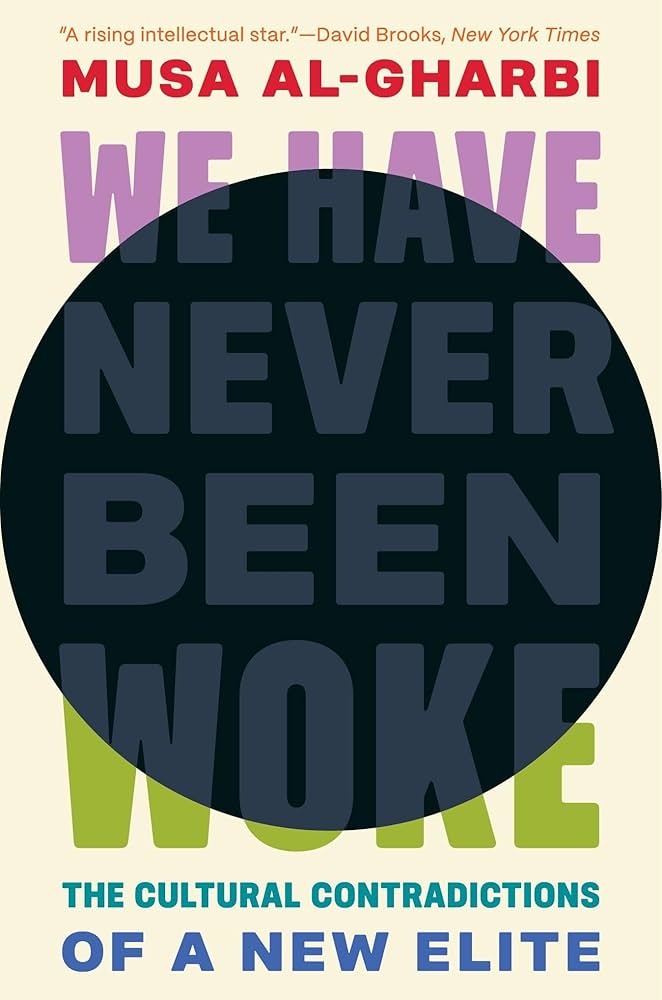
Universities are also losing credibility because of ideological conflicts between conservatives and “woke” progressives that have plagued them for decades, but which have grown particularly virulent in recent years.9 I have no interest in weighing in on this debate. But combined with the replication crisis and the academic fraud crisis, declining enrollments, and the obsolescence of the university as a technology for disseminating information, these ideological conflicts put universities in a deeply precarious position.
What are the implications of these changes for scholars? I would suggest that anyone with a PhD will increasingly be forced to choose between several options. One option is to keep chasing the tenure track. Achieving success in this arena will increasingly mean becoming the equivalent of an academic rock star. For most, I don’t think the sacrifices required to pursue this option will be worth it. I think the pressures required to succeed on this path will only aggravate the problems of academic fraud we are already facing. A second option will be to accept an ancillary role in the intellectual rock star’s orbit as an adjunct instructor or an administrator. Perhaps there will be a few for whom these are viable positions. But I don’t think most individuals with a PhD aspire to either of these outcomes; for most, these options will be dead ends. To my mind, neither of these options truly facilitate the kind of intellectual life we need. A third option, which is the one I am recommending, is to leave the university system and to set out on one’s own. I think there are bountiful opportunities for a meaningful intellectual life and for earning money as a scholar and teacher outside of Academia. It’s time to start forging a path for this to happen on a large scale.
I also want to emphasize that this is not a consolation prize. Leaving the cocktail party is the first step toward true scholarly independence. I don’t mean that institutions per se are a problem for intellectual life. They are undoubtedly necessary, and it is urgent that we find or create new institutional structures for scholarship and the life of the mind. But I would also suggest that intellectual life is not dependent on any particular institutional structure or set of institutions. I would also suggest that the institutions created to cultivate intellectual life in this country have been corrupting it for some time. To the extent that this is true, it’s time to set out in a new direction.
3. Internal goods, the publishing racket, and academic value capture
In the previous two sections, I discussed what I mean by the term independent scholar and by the idea of institutional independence. I also mentioned that I would discuss intellectual and financial independence next.
I want to suggest five ideas in relation to intellectual independence. This is an incomplete, pragmatic list. But here it is:
- Getting a PhD can be worth it, even if one never obtains academic employment.
- People with PhD’s can produce world class scholarship, even if they aren’t employed by a university.
- Scholarly writing is a worthwhile enterprise.
- We need new, open-source platforms for publishing.
- We need new, open-source venues for teaching.
Let’s take a look at each item in detail.
1. First, getting a PhD can be worth it, even if you never obtain academic employment. I once heard someone lament that they might not be able to “use” their PhD by obtaining employment at a college or university. I’ve had the same thought myself. But I also wonder if this is the right understanding of what it means to use a PhD. What if we think of a PhD not primarily as job training, but as training in the practices designed to cultivate certain goods internal to those practices? In using the language of practices and internal goods, I’m drawing on the work of philosopher Alasdair MacIntyre.
To illustrate the difference between internal and external goods, MacIntyre offers the example of a child being rewarded with candy for learning to play chess. The candy is an external good relative to the game of chess. But chess also has internal goods, things you can get only by playing chess. MacIntyre says that these goods “can only be identified and recognized by the experience of participating in the practice in question. Those who lack the relevant experience are incompetent thereby as judges of internal goods.”10 In other words, MacIntyre is saying that if you’ve never played chess, it won’t just be impossible to acquire the goods internal to chess. You won’t even know how to evaluate or make sense of those goods.11
To unpack MacIntyre’s chess example further: in asking about the internal goods of chess, one is asking about what makes chess good aside from other external factors. There are all kinds of associated goods one might imagine, such as chess awards, chess grants, chess publications, chess schools, endowed teaching positions for chess masters, chess clubs for disadvantaged children, chess competitions to fight climate change, and so on. Each of these goods has its place. But none of these goods are the internal goods of chess itself. It would be tragic if we lost sight of the actual joy of playing chess amidst all the other associated external goods.

Alasdair MacIntyre
I want to say something similar about the practices of intellectual life that would, ideally, be taught in a PhD program, and that I believe are taught in many PhD programs. Getting a job as a professor is an external good relative to those practices. Achieving recognition for one’s academic work through awards and grants is also an external good. Other external goods include solving practical problems, such as climate change or inequality. The latter are no doubt very important goods that we should care about. But these goods are extrinsic to the practices of intellectual life. We should be able to identify some goods that are built into the intellectual life, goods you couldn’t get any other way and that you wouldn’t even know how to name or value if you hadn’t been trained in the relevant practices. The fact that scholars often leave these goods undefined or unstated may be a result of the fact that we are so preoccupied with external goods such as jobs and recognition that we rarely ask ourselves what the internal goods of intellectual life actually are. The decision to pursue a PhD should be asked with these goods in mind and might be based on whether the PhD program in question will cultivate the relevant goods. For me, retrospectively, the answer is a definite yes. But this will vary depending on the person and the program.
This failure to ask about the goods internal to the practices of intellectual life seems to lead some academics to feel the need to justify their work in other terms, especially in terms of social impact. That justification in terms of social impact may be necessary, especially when it comes to obtaining funding for one’s research. Social impact is also an important good that scholars should care about. But intellectuals should not let the importance of social impact, or need to provide external justification for their work, eclipse the goods internal to the work itself.
Thinking in terms of internal goods is especially important because it turns the whole scholarly enterprise into a collaborative rather than a competitive one, where each person fights desperately for one of a few and shrinking number of faculty positions. As MacIntyre writes, “External goods are… characteristically objects of competition in which there must be losers as well as winners.” On the other hand, “Internal goods are indeed the outcome of competition to excel, but it is characteristic of them that their achievement is a good for the whole community who participate in the practice.”12 It seems that failure to see how certain goods are internal to the intellectual life has corroded intellectual life, because it has resulted in destructive forms of competition. Refocusing our attention on internal goods is a needed corrective to the zero-sum competition that characterizes much of Academia.
So what are the goods internal to intellectual life? We might answer this question in any number of ways, but I would start by turning to Pierre Hadot’s book, Philosophy As a Way of Life. Hadot argues that intellectual life is most fundamentally about self-cultivation. He puts it like this: “the philosophical life will be an effort to live and think according to the norm of wisdom, it will be a movement, a progression, though a never-ending one, toward the transcendent state.”13 Hadot says that this transcendent state is fundamentally “a consciousness of inner freedom.”14 I would suggest that the primary internal good of Independent Scholarship is independence in this sense. As I said in the first installment of this manifesto, Independent Scholarship is scholarship as the practice of freedom. On the most basic level, this is what I mean by intellectual independence. I recognize that this description of intellectual independence is vague and unspecified, that immediate objections may come to your mind, or that you may have no idea what I am referring to. Still, I find the idea of inner freedom satisfying as starting point for exploration, if inadequate as a full account of intellectual life (and even more inadequate for political life, as Hannah Arendt argues).

But I would add that there are a handful of more specific practices worth discussing. Some of those practices are things like disciplined reflection, writing, research, intellectual friendship, and teaching. There may be others. But these seem to me some of the core practices that belong to the intellectual life. These practices produce internal goods that cannot be achieved in any other way. Each of these practices deserves its own extended discussion, which I will defer to another time. But let me note that I refer to intellectual friendship instead of publishing, because I believe publishing is only one way of sharing one’s work. The practice of publishing is important, because it turns the intellectual enterprise into a collaborative one. But publishing is not the only, or even necessarily the best, way to achieve that objective. I would propose that intellectual friendship is the broader practice within which we ought to think of scholarly publishing.15
2. I just said that publishing is a subset of intellectual friendship. But I would like to discuss publishing in more detail, because it is an activity that nonetheless involves almost all of the practices of the Independent Scholar, including disciplined reflecting, writing, and research. Publishing is also an activity whose conditions and purpose are not always clear. I will start with the conditions needed for producing scholarship, before discussing the purpose. Regarding the conditions, I want to say: People with PhD’s can produce world class scholarship, even if they aren’t employed by a university.
Sometimes it might even be the case that people with PhD’s can produce better scholarship when they are not employed by a university. It seems that not a few faculty are held back by constraints on what they feel they can publish. Nassim Nicholas Taleb observes that academics often “live under continuous anxiety, pressures, and indeed, severe bastardization of the soul.” Unsurprisingly, he notes, this “corrupts their writing.”16 For some, publishing as an Independent Scholar will be a liberation from those constraints. Of course, those who choose this path will need to carve out time and money for research and writing. But how many professors at universities lack exactly these two things? It seems to me that there is a great deal of time and money to be had outside of Academia. Why not go earn money and create time for yourself, so that you can pursue your own research according to your own plan?
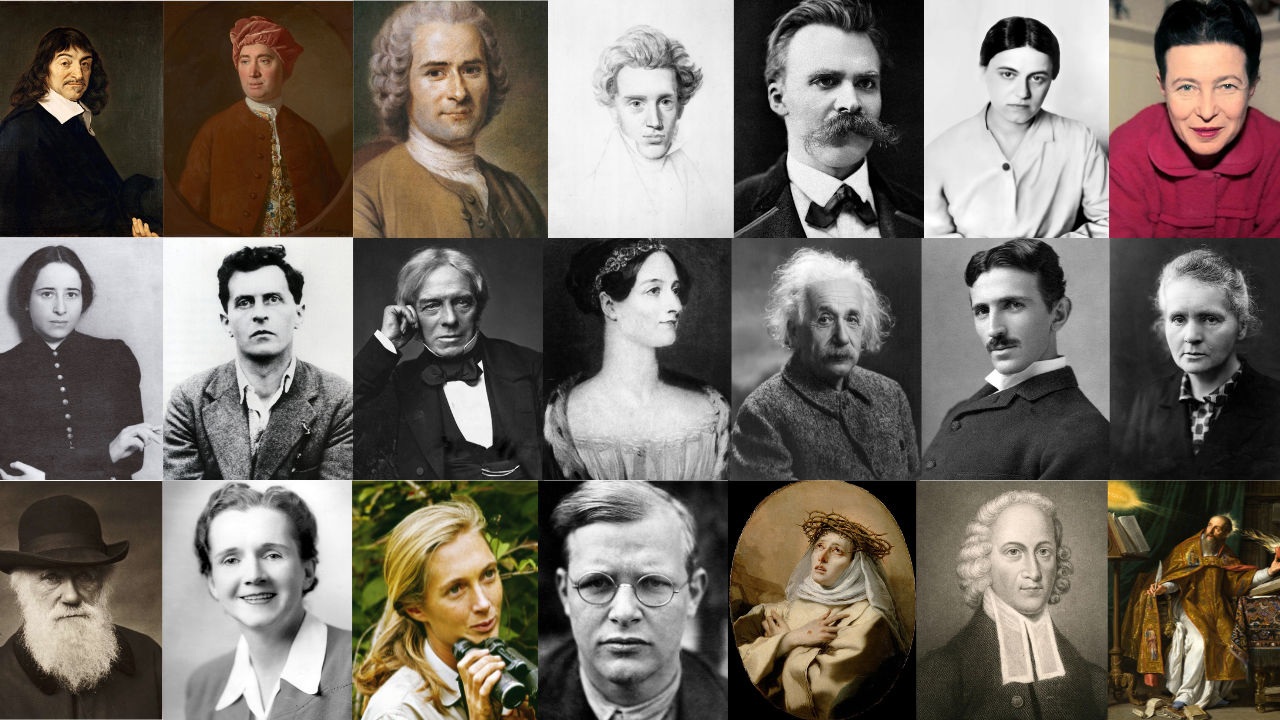
Time and money aside, many of the great intellectuals have lived and worked away from universities. Some did so for part of their careers, others for the entirety. I need only mention philosophers such as Descartes, Hume, Rousseau, Hegel, Kierkegaard, Nietzsche, Edith Stein, Simone de Beauvoir, Hannah Arendt, and Ludwig Wittgenstein. Among scientists, Michael Faraday, Ada Lovelace, Charles Darwin, Nikola Tesla, Marie Curie, Albert Einstein, Rachel Carson, and Jane Goodall are noteworthy examples. My training is in religion, so I would be remiss if I did not also mention Augustine, Catherine of Siena, John Calvin, Jonathan Edwards, and Dietrich Bonhoeffer. Each of these figures produced field-changing, paradigm-shifting scholarly work of enduring value during periods of time when they were not employed by a university. Hegel and Einstein released their most famous work before obtaining stable university employment. Bonhoeffer published some of his most profound writings only after being pushed out of his university position by the Nazis. Jane Goodall never obtained an undergraduate degree, though she later earned a PhD. Nikola Tesla left university without obtaining a degree. If this group is any indication, one could say with confidence that being employed by a university is neither necessary nor sufficient for producing groundbreaking scholarly work, even in the sciences.
The upshot of these examples is that institutional setting is entirely contingent. Independent scholars should be flexible and open-minded about the institutions they affiliate with. They should also be entirely pragmatic. If an institution will support their work for a time, they should take advantage of the opportunity. But they should leave as soon as it becomes clear that the institution no longer offers what they need to continue working with a sufficient degree of intellectual independence. This is an important intersection of intellectual and institutional independence: it is impossible to have one without the other.
3. I also want to talk about the purpose of publishing. On this point, I would argue that scholarly publishing is a worthwhile enterprise. I’m surprised how often I hear skepticism about the entire enterprise of scholarly writing, not only from non-scholars, but from those who have ostensibly dedicated their lives to this pursuit. One critique I have heard goes something like this: only a few people will ever read my scholarly work, and most people couldn’t understand it if they tried, so why bother? One response to this worry is to try to become more “engaged,” perhaps through popular-level writing or social media. I do understand the sense of futility that can accompany the process of scholarly writing and publication. But I think the arguments that accompany that futility are generally misguided and the attempted solutions often a waste of time.
For one, it isn’t necessarily true that only a few people will read one’s scholarly work. There are niche communities online whose interests are even more specific than much academic work. Post your work online and you will almost certainly find interested readers from all over the world. Even better, find conversation partners and share your work with each other. This can be done even if you are not in the same field. I think there is rich opportunity for intellectual exchange through writing, perhaps more than ever before. It is part of the purpose of academic writing to cultivate communities capable of facilitating that exchange, but we need to write in order for those communities to form.
On a more fundamental level, I think we have lost touch with the idea that writing, thinking, and personal formation can be part of a single, coherent, integrated process. Personally, I write in order to unfold my intuitions, to see where they lead, and to see whether they hold up. Writing is for me a process of discovery. It’s part of how I explore the world, sharpen my thoughts, clarify my emotions, and shape my sense of self. On some level, I don’t care whether anyone ever reads what I write. Writing can be a meaningful practice even if the result of one’s writing is never shared. If it is hard for us to imagine scholarship in this way, I don’t think the problem is scholarly publication per se. The problem may be a constricted sense of what scholarship is and can be. Scholarly writing and publishing can shape us morally, emotionally, and spiritually in profound ways if we pursue it with those ends in mind. Writing can be a tool for the inner freedom that the independent scholar cultivates. It can also be a medium for intellectual friendship.
Beyond the question of whether any individual’s scholarly writing is important, I think the collective scholarly enterprise is an essential part of contemporary society. It is true that most works of scholarship will not be widely read in the way that, say, works of popular fiction or those of some superstar intellectuals are. But this is true in almost every human endeavor. Only the best practitioners in any field become well-known, especially outside their field. Participants in a practice who complain they no one will ever hear of them, as some academics do, have missed the point (though Thomas Nagel has a fascinating explanation of why this sort of thing tends to bother us). There are many athletes in every sport, many musicians, many business persons, and many writers that most of us will never hear of. But in order for the famous few to emerge, there have to be many others laboring in that field, pushing it forward in new ways, training new entrants, and maintaining the standards of excellence appropriate to that field. The humanities as a whole seem to have lost touch with this idea. The result is a general malaise around scholarly writing and publishing and, I think, a significant loss. Again, we need a better sense of internal goods of scholarly writing and publishing, goods which can be achieved whether or not one’s writing achieves recognition or fame.
4. The remaining two ideas about Independent Scholarship have to do with the institutions that facilitate publishing and teaching. Regarding the first, I would argue that we need new platforms for publishing. While I defended the importance of scholarly publishing in the previous section, it is also true that academic publishing has been corrupted by the institutions that produce it, just as intellectual life has been corrupted by the institutions created to cultivate it. The academic publishing process (especially for academic journals) is held hostage by a handful of publishers who do not work for the best interests of scholars or scholarship. We need public, nonprofit, open-source platforms—think something like Wikipedia, Reddit, or GitHub for scholarly publishing—that include rigorous and efficient peer-review processes. The current system hides scholarship behind paywalls, which do in fact prevent it from being read. I think this is bad for scholarship and bad for scholars.
As a side note, I would suggest that scholars should consider making their published work available online for free, even if this violates an agreement with a publisher. Many publishing agreements are unjust, because they benefit one party at the expense of another and because there are no other viable options for scholarly publishing. This is little better than a racket. I think it is morally permissible to violate publishing contracts in order to rectify the injustice that they seek to legitimize through a veil of legality. I view this as a justified form of civil disobedience, or as a tactic in Michel de Certeau’s sense. I support projects such as Anna’s Archive for the same reason.
5. Finally, I would argue that we need new venues for teaching. I have some hesitation about endorsing online platforms for disseminating content, even though I use them often both to produce and to consume content (I’ll have more to say about this in the future). Something about the centralization of control over so much content worries me. That being said, I still think platforms such as Substack and YouTube are probably some of the best options for independent scholars who want teaching to be an ongoing component of their intellectual lives. Not only this, but it is entirely possible, indeed it is likely, that you can make more money creating courses and lecture series online than you can in many university positions. Successful content has the potential to continue to generate income in perpetuity. Many contemporary colleges and universities can’t offer anything like this type of income security, even for faculty with tenure.
Money is an external factor, even if a necessary one. But we also need new venues for teaching because, in the current university system, much teaching has lost touch with the internal goods of intellectual life. Some of my favorite diagnoses of the fate of university teaching are those of Hilarius Bookbinder, for example:
Scriptorium Philosophia
Comments on “The average college student today”
Wow did people have a lot to say about that post. Over 400,000 people read it and over 1400 restacked it, thus making it more widely read than probably all of my professional writings combined. I am surprised and grateful for the engagement…
We’re not going to solve this problem on the same level of institutional thinking that created it, to paraphrase an apocryphal saying of Albert Einstein. Teaching in the university system is so entangled with chasing metrics that belong to the wrong games that I have little hope for it.17 C. Thi Nguyen calls this “value capture.” The only way I see around this problem is to remove ourselves from the teaching game set up by the university system and to create new games built around the actual goods of teaching. This is vaguer and more general than it should be, but I hope it’s enough to serve as a placeholder for more thinking and for more work in this area.
There is much more that can and should be said about what it means to cultivate intellectual independence. But these five ideas capture some important aspects of the idea. We might summarize them in the following five terms, which to my mind capture some of the core values of intellectual independence:
- Cultivating inner freedom
- Institutional flexibility and pragmatism
- Intellectual friendship through written and verbal dialogue
- Open-source publishing
- Open-source teaching
4. Money and memento mori
Academics are not trained to think well about money. In fact, I would say that we are well-trained not to think about it at all. We often approach it instead with some mixture of condescension, confusion, apprehension, and disgust. I speak for myself.
I’ve actually had a long-standing side interest in investing, one I largely ignored and rejected for many years as morally suspect. Investing is morally suspect in a number of ways. Our culture has almost entirely forgotten the consensus of the three great Abrahamic religions—Judaism, Christianity, and Islam—that taking interest is morally blameworthy. And our financial system is a train wreck of corruption, conflicts of interest, and exploitation that any right-thinking person should view with suspicion.
Unfortunately, I haven’t yet figured out a way to stop using money, which means the question becomes: how to use it well? After I left the Academy, I took a job with a company in the renewable energy industry where I worked for about three years. I had no business experience or knowledge and obtained the job through some combination of luck and the kindness of my new employer. I spent a while looking for ways to obtain some basic level of business knowledge. I took an introduction to accounting course at thirty-five, something my twenty-five-year-old self never could have imagined doing. I started a certification in corporate sustainability reporting. I thought about getting an MBA, but felt doubtful about the massive debt this would require, not to mention the time it would take and the letters it would add to the already excessive list after my name. (Who wants to be an MA, MTS, PhD, MBA?) Then I discovered the CFA.
The Chartered Financial Analyst (CFA) Institute curriculum provides some of the most rigorous financial training in the world at a fraction of the cost of an MBA. I recently spoke to an investment banker who told me he found the first level of the CFA’s three tests difficult, even after completing a BA in accounting and an MBA in finance. The CFA Institute recommends spending at least 300 hours studying for each test, which means a total of 900 hours for the full certification (compare this to the recommended 300-500 hours of studying for accountants wishing to earn the CPA). I immediately knew this was my best option: world-class training in the fundamental language of business (finance and accounting) that I could pursue independently at a very low cost.
I jumped in, half-heartedly at first, then as the first exam approached rising early and going to bed late in order master the intricacies of statistical analysis, the time value of money, basic economics, corporate financial statements, stock valuation, derivatives, and more. In certain ways, this learning process was more difficult than anything I did during my PhD. It felt like I was growing a brand new part of my brain. I scraped through the first test successfully and spent about a year studying for the second test, which I did not pass. I studied for seven hundred hours all told. I decided at this point that I had what I needed. I knew I didn’t want to be an investment banker or a security analyst, so there was no specific reason for me to obtain the full CFA certification by passing all three tests. But my perspective on money, finance, and economics had been fundamentally transformed. When I left my corporate job last year, I knew more about finance than almost anyone else at the company.
Before studying for the CFA, I used to criticize capitalism without really having any idea how it worked. After the CFA, I have a much better idea. Am I still critical of capitalism? Yes. But now I’m more interested in figuring out how to work against it by knowing it from the inside, rather than by ignoring it. Capitalism is unavoidable. It’s a strategic reality, to use a framework of Michel de Certeau. Users of capitalism, however, are nonetheless able to relate to it tactically, subverting its rules and structures to their own ends. Intellectuals won’t be able to relate tactically to capitalism, however, if our understanding of it is based on a smattering of Marx and Weber, a vague sense that we don’t like Milton Friedman, a New York Times-cultivated conviction that the experts at the Federal Reserve are mere technicians rather than purveyors of a set of moral values, and a sincere but naive belief that there are “ethical investments” out there somewhere (if we could only find them) that would assuage our consciences in exchange for a few a percentage points per year and still allow us to retire comfortably. (Again, I speak for myself.) Meanwhile, Wall Street firms pull the strings of the global economy and laugh at our ignorance. This will not do.
I said in section 1 of this Manifesto that the independent scholar cultivates three kinds of independence: institutional, intellectual, and financial. It’s time to talk about financial independence. I want to start by saying that by financial independence I do not mean independent wealth. Being independently wealthy means you have enough wealth that you no longer have to work. I do think this outcome is more achievable than many of us would assume. (See, for example, the work of Early Retirement Extreme and Mr. Money Mustache.) At some point I laughed to myself that my odds of becoming independently wealthy were probably better than those of landing a good tenure track position at a college or university. The humor lies in the absurdity that someone with rock solid academic credentials improves their likelihood of financial success by starting over in a completely new career. But what I want to talk about in this post is something deeper than wealth. I want to talk about a mindset shift around money.
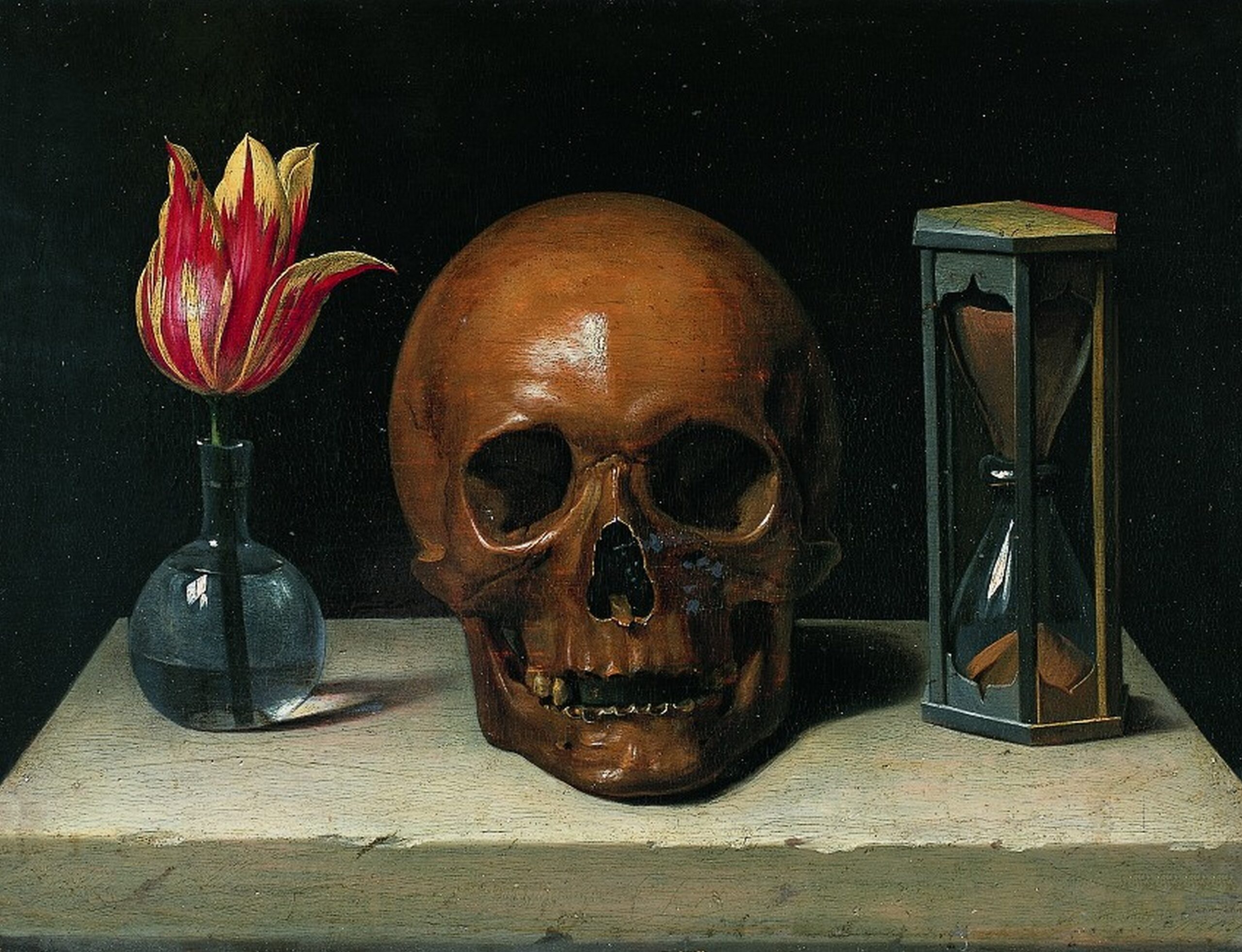
Financial independence as I understand it is not about wealth, but about recognizing that death is coming for all of us sooner or later. On a cosmic timescale, death is already knocking at the door for each of us. Remembering that death is immanent puts money in a different perspective. This mindset doesn’t immediately solve anything. It doesn’t necessarily mean that anxiety about money will go away. It doesn’t mean that money doesn’t matter. Money is a real thing that solves real problems. (Though, as Naval Ravikant puts it, the only problems money can truly solve are money problems.)
In the scope of one’s life, money problems are some of the least important, especially beyond a certain point of basic sustenance. For myself, I know they often serve as cover for deeper existential challenges I struggle to face directly: Why am I here? What am I here to do? What hard decisions am I avoiding? In what relationships am I failing to make things right? What challenges am I too afraid to engage? What risks am I too afraid to take? Too often, I tell myself I’ll answer these questions when I have more money.
Seneca recommended temporarily living apart from all of one’s possessions on a regular basis as a reminder that possessions are both unnecessary and unavoidably impermanent. Worry about possessions not only generates more anxiety about money, but can serve as one more distraction from the deeper questions each of us needs to ask.
Financial independence means asking these questions directly. It means knowing what thing, cause, person, relationship, or project you would sacrifice all of your money and possessions for, if it came to it. It means consistent awareness of the fact that you will die soon, that all of your possessions will go to someone else, and that everyone will forget you. Are you still worried about money? Or do you feel a different kind of dread now? If the latter, good! You’ve taken the first step toward financial independence. If you can endure the terror of the shortness and insignificance of your life, and if you can alchemize that terror into a sense of calm and acceptance, it will permanently and fundamentally transform your relationship with money. I call that transformation financial independence. I like how Vicki Robin describes financial independence in her book, Your Money or Your Life: “Financial independence is an experience of freedom at a psychological level. You are free from the slavery to unconsciously held assumptions about money, and free of the guilt, resentment, envy, frustration, and despair you may have felt about money issues” (p. 55). This kind of independence is only another facet of what I talked about in the previous sections of this essay. Institutional, intellectual, and financial independence are three flowers on the same stalk. They’re different forms of the same internal freedom.
With this framework in place, I want to suggest a few more specific ideas for those with PhD’s inside or outside the academy who are wrestling with these questions.
- People with PhD’s are capable of earning a lot of money.
- People with PhD’s deserve to earn a lot of money.
- Making money isn’t evil.
1. People with PhD’s are capable of earning a lot of money. I think this point needs to be emphasized. If you successfully earned a PhD, you have the ability to make money. All you have to do is to apply yourself with the same intensity and dedication to making money that you did to completing your PhD. Making money is a skill that can be learned like any other skill. It might take some time. More people with PhD’s need to know that they actually can make money if they set their minds to it. There are abundant resources for learning to make money. Read all the business and self-help books you can get your hands on, digest them, master them. Learn about new fields and certifications that will give you credibility and enhance your earnings potential. Experiment with new projects. Talk to new people. Each of these tasks will be easier than getting a PhD and the financial payoff will likely be much larger. If you have a PhD, you’re capable of understanding and putting new material into practice. Indeed, if you’re willing to become a beginner again, I suspect that learning to make money will be much easier than earning a PhD.
2. People with PhD’s deserve to earn a lot of money. To think through this a little more, stop for a second to ask how much tuition is paid for a class that you typically teach. I estimate that, collectively, students in the classes I used to teach paid between $100,000 and $300,000 in tuition. That’s per class, per semester. Let’s give half of that number—a generous cut, I think—to staff, maintenance, facilities, and administrators. This still leaves between $50,000 and $150,000 of tuition for the instructor (ten to twenty times more than many adjuncts are paid). Say I were to teach four classes at this price point per year. I don’t see why I shouldn’t be making between $200,000 and $600,000 for this service. Run the numbers for your own situation and see what you come up with. Perhaps your students pay less tuition, or perhaps your administrators deserve higher salaries (though I seriously doubt the latter). Whatever the case may be, I am almost certain that most university instructors are criminally underpaid, and this probably includes many tenured professors at prestigious universities. Now ask yourself: where is all of that money going? And why shouldn’t more of it go to the professors who are the only ones that are actually essential to running a university? Let me say that again: the only thing you need to run a university is professors, smart people with PhD’s who know how to teach and how to do research. Everything else is secondary. That being the case, if university instructors are not being paid reasonably, and if we can’t carry out our work successfully in existing institutions, it’s time to leave and to find other places where we are paid what we are worth.
3. Making money isn’t evil. The humanities are going to die if everyone in the humanities keeps accusing anyone who tries to make money of being a capitalist. I would like to think that I am just as critical of capitalism as the next North American with a doctorate in the humanities. But until we abolish capitalism and replace it with something better, we’ll need money to keep the humanities alive. People with PhD’s in the humanities need to go make a lot of it or pretty soon there won’t be any more PhD programs in the humanities, because there won’t be anyone funding them. At many of our universities, there may not even be anyone who really understands what the humanities are or what they are for. So stop getting tangled up in your own moral objections and go make some money. The fact is that even as a professor or a graduate student you are deeply entangled in capitalism and finance. Indeed, I suspect that there is a direct correlation between the size of a university’s endowment—a pot of money managed by financiers who could not be more capitalist if they tried—and the shrillness of the denunciations of capitalism delivered by that university’s faculty and graduate students. Independent scholars need to start making what Taleb, author of Black Swan, calls “f*** you” money. As Nicholas Nassim Taleb explains, f*** you money “shields you from prostituting your mind and frees you from outside authority—any outside authority” (p. 21). This is another form of independence that I think more intellectuals are capable of achieving and should try to achieve, not for the sake of making money, but for the sake of pursuing their intellectual vocations without interference from external conflicting interests.
There is more that needs to be said about each of the ideas I have discussed in this section and the previous three. But as we reach the end of this manifesto, I’d like to return to the idea of being an Independent Scholar. There are no doubt a host of exemplars to whom we might turn for inspiration here. But I would nominate Moses Mendelssohn as the patron saint of contemporary Independent Scholars. Mendelssohn was a Jew in eighteenth-century Berlin, recognized across Europe not only as a philosopher but also as a defender of Jewish equality and an interpreter of Judaism. As a Jew, however, Mendelssohn was unable to obtain employment at a university. He spent his professional life working at a silk factory, first as a bookkeeper and then as an owner. Let me say this: if Mendelssohn was able to write brilliant philosophical work over many decades while earning enough money to provide for himself and his family, there is no reason the rest of us can’t try to do the same. Circumstances, abilities, and outcomes will vary. But this should not stop us from working to create new institutions that serve the intellectual life more effectively and from carrying out meaningful intellectual work to the extent of our abilities.
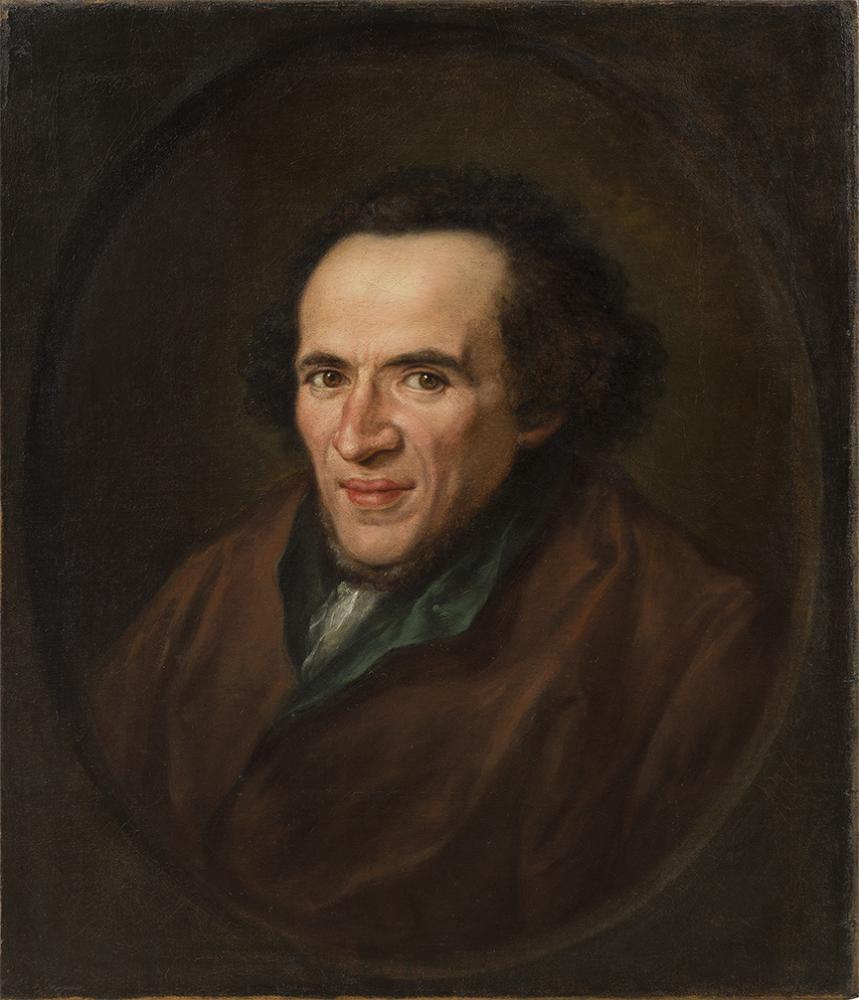
Moses Mendelssohn
Notes
“They Studied Dishonesty. Was Their Work a Lie?” The New Yorker, October 9, 2023. ↩
“Is College Worth It? A Comprehensive Return on Investment Analysis,” FREOPP. ↩
“College-Age Demographics Begin Steady Projected Decline,” Inside Higher Ed, December 11, 2024. ↩
“Colleges That Couldn’t Survive 2025,” Inside Higher Ed, December 18, 2025. ↩
“Replication Crisis,” Wikipedia. ↩
“Harvard President Claudine Gay Plagiarism,” The New York Times, December 20, 2023. ↩
“They Studied Dishonesty. Was Their Work a Lie?” The New Yorker, October 9, 2023. On the case of Francesca Gino. ↩
“Science Papers, Fraud, and Research Paper Mills,” The New York Times, August 4, 2025. ↩
An excellent treatment is that of Musa al-Gharbi, We Have Never Been Woke: The Cultural Contradictions of a New Elite (Princeton University Press, 2024). Also see the “grievance studies affair,” in which bogus papers were submitted to and in several cases published by peer-reviewed journals in a number of fields. ↩
Alasdair MacIntyre, After Virtue, 2nd ed. (University of Notre Dame Press, 1984), 188–89. ↩
A similar idea is invoked in L. A. Paul’s notion of transformative experiences, which are those one cannot decide to undertake based on utilitarian calculations, since one cannot know the nature of the experience involved and one cannot even know one’s preferences will change in wake of the experience. Instead, one has to decide based on whether one wishes to go through the transformation that the experience will entail. Being initiated into practices with internal goods might be described as a transformative experience of this sort. See her book, Transformative Experience (Oxford University Press, 2014). ↩
MacIntyre, After Virtue, 190–91. ↩
Pierre Hadot, Philosophy as a Way of Life: Spiritual Exercises from Socrates to Foucault, ed. Arnold Davidson, trans. Michael Chase (Wiley-Blackwell, 1995), 59. ↩
Hadot, Philosophy as a Way of Life, 69. ↩
Of course, the necessity of friendship for intellectual life was recognized by Aristotle and others after him. For an excellent discussion, see Lorraine Smith Pangle, Aristotle and the Philosophy of Friendship (Cambridge University Press, 2003). ↩
Nassim Nicholas Taleb, Antifragile: Things That Gain from Disorder (Random House, 2012), 164. ↩
This problem goes back at least as far as the early twentieth century, as Frank Donoghue shows in The Last Professors (Fordham University Press, 2008). ↩